What Is an Identity Graph? How Customer Data Connects

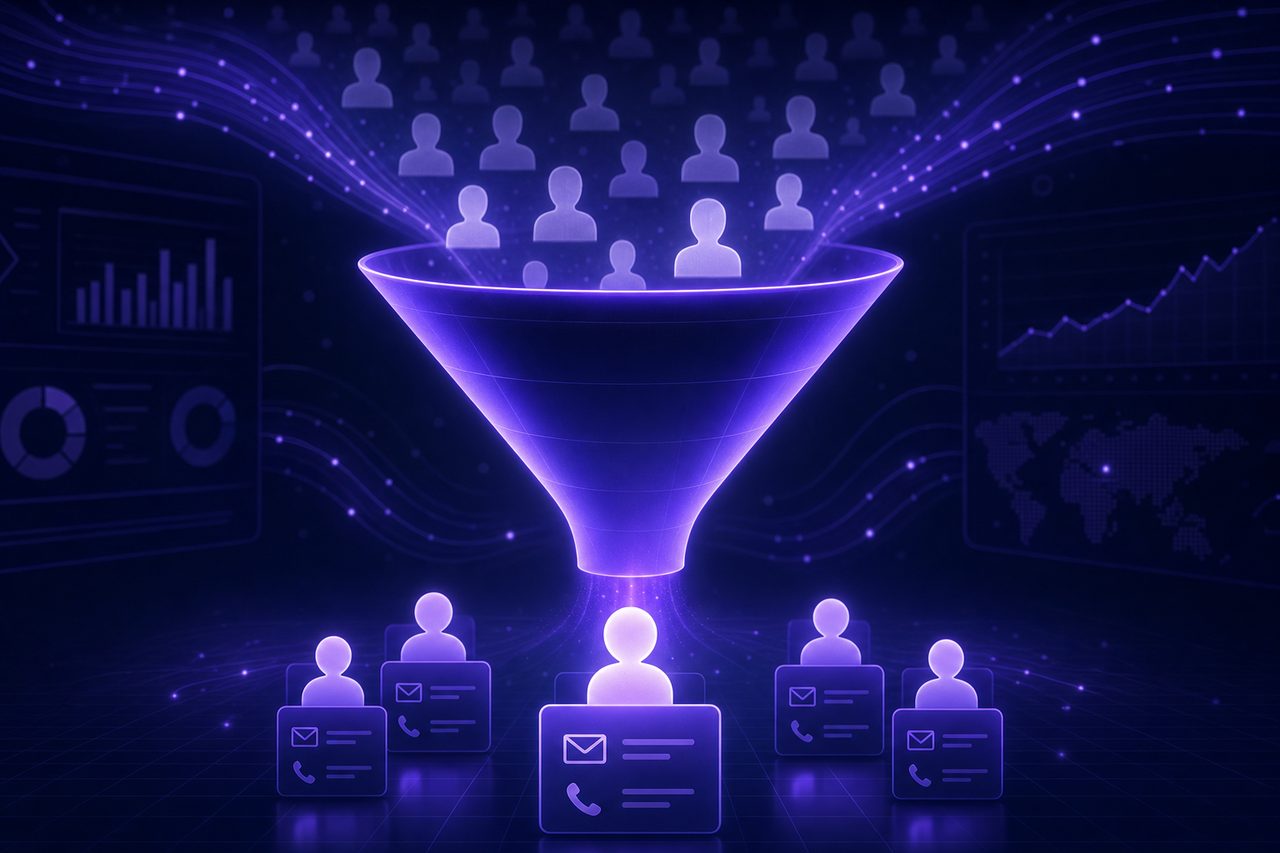
A single customer might touch your brand from a phone, a laptop, two email addresses, and an in-store purchase — and look like four different people in your data. An identity graph is what stitches those fragments back into one person.
What is an identity graph?
An identity graph is a database that connects the many identifiers a single person uses — devices, email addresses, cookies, and account logins — into one unified, persistent profile.
It's the connective tissue of modern customer data. Without it, every channel sees a partial, disconnected view. With it, you get a single, durable representation of each real person across every touchpoint.
What an identity graph connects
- Device IDs across phones, tablets, and computers
- Email addresses and hashed identifiers
- Cookies and first-party identifiers
- Account logins and CRM records
- Offline identifiers like purchase or loyalty data
Deterministic vs. probabilistic matching
| Method | How it links | Confidence |
|---|---|---|
| Deterministic | Exact matches on known identifiers (e.g. a login email) | Very high |
| Probabilistic | Statistical likelihood based on patterns (device, location, behavior) | Inferred — useful at scale |
The strongest identity graphs blend both: deterministic links for certainty, probabilistic links for reach.
Why identity graphs matter
As third-party cookies fade, a durable identity graph built on first-party and authenticated signals becomes essential infrastructure. It powers accurate personalization, frequency control, attribution, and measurement — all of which break down when a single person is scattered across disconnected records.
Where this fits in the Unlockedly model
The identity graph is the underlying data structure; identity resolution is the process of using it to merge fragmented signals into one profile. Once a person is unified in the graph and tied to real outcomes, you've built the foundation for Revenue Identity™ — Unlockedly's revenue-focused layer that turns a connected identity into measurable pipeline rather than just a tidy database.
Frequently asked questions
What is an identity graph?
An identity graph is a database that connects the many identifiers a single person uses — devices, email addresses, cookies, and account logins — into one unified, persistent profile across every touchpoint.
What does an identity graph connect?
It links device IDs across phones and computers, email addresses and hashed identifiers, cookies and first-party identifiers, account logins and CRM records, and offline identifiers like purchase or loyalty data.
What's the difference between deterministic and probabilistic matching?
Deterministic matching links exact matches on known identifiers like a login email and is very high confidence. Probabilistic matching uses statistical likelihood based on device, location, and behavior — inferred but useful for scale. Strong graphs blend both.
Why do identity graphs matter?
As third-party cookies fade, a durable identity graph built on first-party and authenticated signals becomes essential infrastructure for accurate personalization, frequency control, attribution, and measurement.
Start unlocking your traffic today
Add the consent banner to your site, fund your account, and only pay for the contacts you unlock — from 10¢ each.
Get started →